
SEO vs SEM: What’s the Real Difference?
Learn the difference between SEO and SEM in simple terms. This beginner-friendly guide explains how both strategies work, their benefits, and when to use each for better website growth.
4/20/20263 min read
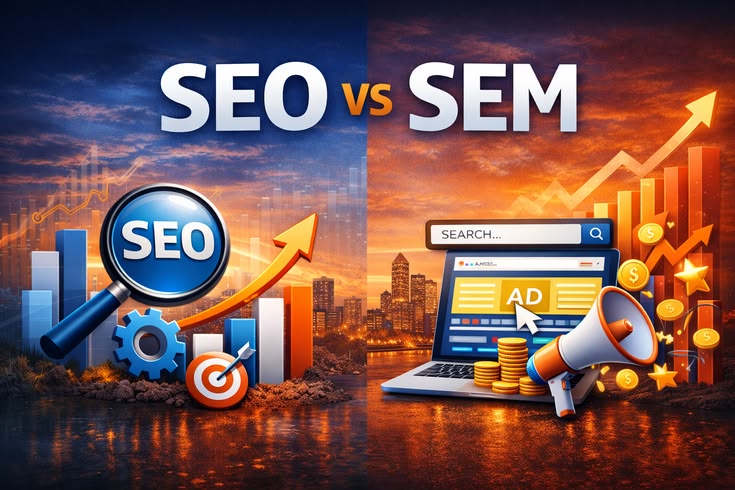
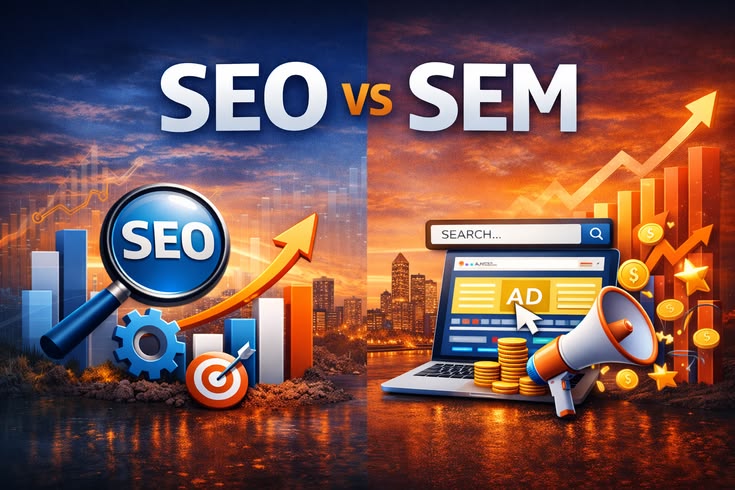
What is SEO?
SEO stands for Search Engine Optimization.
In plain English, it means:
Making your website better so Google shows it to more people — for free.
Let’s understand with a simple example:
Imagine you search on Google:
“best shoes for running”
You’ll see a list of results. Most of them are not ads. These are SEO results.
That means those websites didn’t pay Google — they earned their place by creating useful content.
A Real-Life Way to Think About SEO
SEO is like growing a plant
You plant a seed (write content)
You water it (optimize it)
You give it time (stay consistent)
And slowly, it grows and starts bringing traffic to your website.
But yes — it takes time. There’s no shortcut here.
Why SEO is Important
It brings free traffic
Builds trust with your audience
Works for the long term
Helps your website grow naturally
If you want stable growth without spending money daily, SEO is your best friend.
What is SEM?
SEM stands for Search Engine Marketing.
But don’t worry about the big name.
In today’s world, SEM usually means:
Running paid ads on search engines like Google.
Simple Example:
Search this on Google:
“buy running shoes online”
The first few results you see will have a small label saying “Ad”.
These are SEM results.
The website owner paid Google to show their website at the top.
A Real-Life Way to Think About SEM
SEM is like turning on a tap
You pay → traffic comes instantly
You stop paying → traffic stops
It’s fast, but it’s not permanent.
SEO vs SEM: The Main Difference
Let’s make it super clear:
SEO = You earn traffic
SEM = You pay for traffic
That’s it. That’s the core difference.
Quick Comparison
FeatureSEOSEMCostFree (but takes effort)PaidResultsSlowInstantTraffic TypeOrganicPaidDurationLong-termShort-termTrust LevelHighMedium
How Google Actually Works
Before you go deeper, you should understand one thing.
Google does 3 main things:
Crawls websites (finds pages)
Indexes them (stores them)
Ranks them (decides what to show first)
Where SEO and SEM Fit In
With SEO, you improve your website so Google ranks you higher
With SEM, you pay Google to put your site at the top
Types of SEO You Should Know
1. On-Page SEO
This is everything you do on your website.
It includes:
Writing helpful content
Using the right keywords
Adding titles and descriptions
Internal linking
Simple idea: Make your content useful and easy to understand.
2. Off-Page SEO
This happens outside your website.
It includes:
Backlinks (other websites linking to you)
Social sharing
Brand mentions
Think of it like other people recommending you.
3. Technical SEO
This is about how your website works behind the scenes.
It includes:
Website speed
Mobile-friendly design
Secure connection (HTTPS)
Proper structure
If your website is slow or broken, Google won’t rank it well.
What Makes SEM Work?
SEM is more than just running ads. You need a few key things:
1. Keywords
You choose what people search for.
Example:
“buy laptop online”
2. Ad Copy
This is the text people see in your ad.
If it’s boring → no clicks
If it’s clear and attractive → more clicks
3. Bidding
You compete with others.
Higher bid + better ad quality = better position
4. Landing Page
This is where users go after clicking your ad.
If your page is bad, you lose money.
Pros and Cons of SEO
Advantages
✔ Free traffic
✔ Long-lasting results
✔ Builds trust
✔ Great for branding
Disadvantages
✘Takes time (months)
✘ Needs consistency
✘ Can be competitive
Pros and Cons of SEM
Advantages
✔ Instant results
✔ Targeted audience
✔ Easy to control
✔ Good for testing ideas
Disadvantages
✘ Costs money
✘ Stops when budget ends
✘ Can become expensive
When Should You Use SEO?
Go for SEO if:
You want long-term growth
You don’t want to depend on ads
You are building a brand
When Should You Use SEM?
Use SEM if:
You want quick traffic
You’re launching something new
You want fast results
Best Strategy: Use Both Together
Here’s the smart move:
Use SEM for quick results
Use SEO for long-term success
Example
Let’s say you have a blog or business.
Run ads for quick traffic
At the same time, write SEO blogs
Slowly, your SEO will start bringing free traffic.
Then you won’t depend fully on ads.
Common Mistakes Beginners Make
1. Expecting Fast SEO Results
SEO takes time. Be patient.
2. Skipping Keyword Research
Without keywords, you’re just guessing.
3. Spending Too Much on Ads
Running ads without strategy = wasting money
4. Ignoring Website Quality
Even ads won’t help if your site is bad.
A Simple Plan for You
If you’re starting your website on Hostinger, follow this:
Step 1: Choose a Topic
Pick something people search for.
Step 2: Write Helpful Content
Focus on solving real problems.
Step 3: Use Basic SEO
Add keywords naturally
Use headings
Keep content clear
Step 4: Try Small Ads
Start with a low budget.
Step 5: Improve Over Time
Check what works and improve it.
Final Thoughts
SEO and SEM are not competitors — they are partners.
If you only depend on SEM, you’ll always spend money.
If you only depend on SEO, you’ll wait too long for results.
The best approach is balance.